
Framework price with individual call-off
A fixed price over the term; you continue to order in individual quantities as needed – without price negotiation per order.
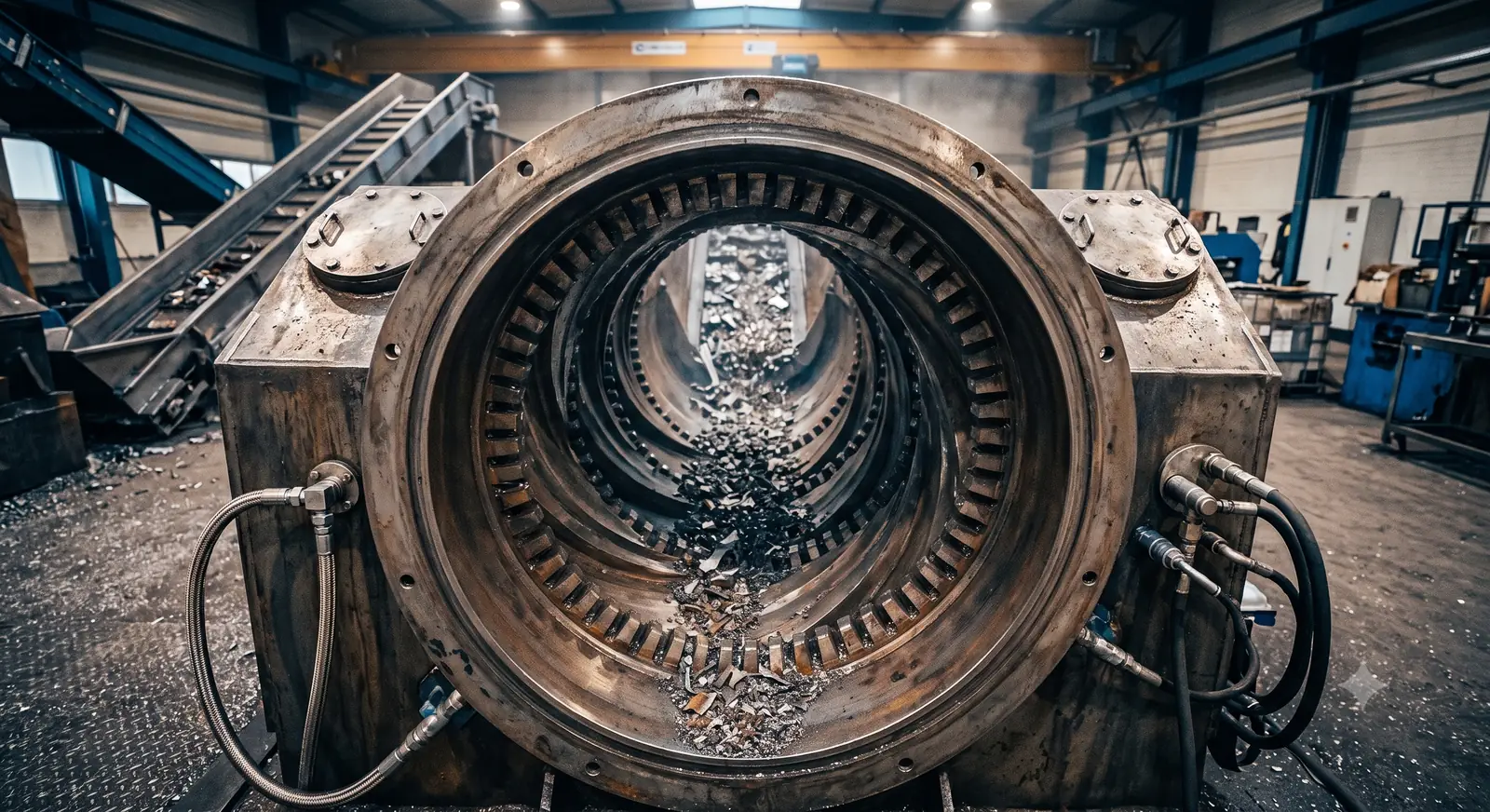
For predictable demand
If you regularly need ripper teeth, shredder knives or wear plates, a framework agreement pays off: a price fixed over the term, an agreed production batch size and a call-off model that matches your actual consumption.
What is a framework agreement for wear parts? A framework agreement sets a fixed framework price and an agreed production batch size for a recurring part over a defined period – usually one year. The customer calls off the quantity as needed instead of renegotiating each order individually. This reduces procurement effort and secures availability for both sides.
Pricing factors
For technical wear parts there are no fixed unit prices – every calculation considers several factors at once:
| Factor | Effect on the framework price |
|---|---|
| Dimensions | Material input, machining effort |
| Material grade | Raw-material cost, achievable service life |
| Heat treatment | Process effort, hardness and toughness target |
| Annual volume | Quantity scaling, capacity utilisation |
| Production batch size | Set-up cost per piece, delivery rhythm |
| Target price | Comparison with material and manufacturing alternatives |
| Repeat requirement | Suitability for a multi-year framework agreement |
| Desired stocking strategy | Stock holding, response time, tied-up capital |
Models
A fixed price over the term; you continue to order in individual quantities as needed – without price negotiation per order.
An agreed annual quantity, split into fixed production lots with defined call-off dates or call-off allowances.
Agreed stock held at ReCutec for particularly short response times on critical wear parts.
Benefits
Process
We record annual volume, repeat requirement and previous service lives for each part.
Together we define batch size, call-off rhythm and stocking strategy.
The framework price is locked in for the agreed term.
You call off quantities as needed – without renegotiating the price.